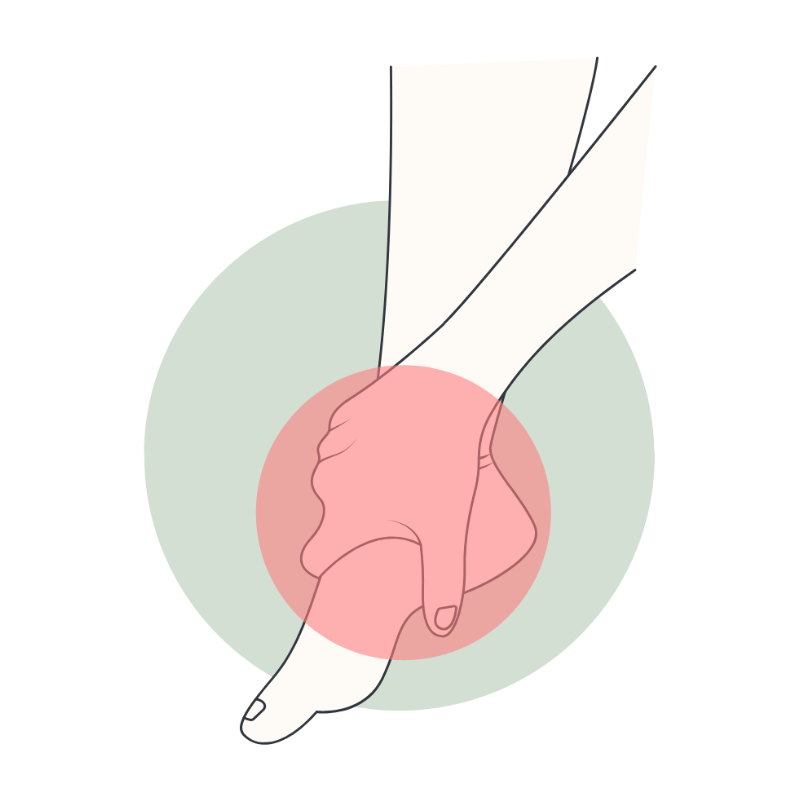
Does this sound familiar?
Sprained joints and ligaments can show up in different ways. You might notice:
- Pain and swelling after twisting or rolling a joint
- Bruising around the ankle, knee or wrist
- A joint that feels loose, weak or gives way
- Stiffness that lingers weeks after the injury
- Pain when you put weight on it or grip
- The same joint getting sprained again and again
We'll check how stable the joint is and which ligament is involved, so your treatment and exercises match the injury.
What causes sprains?
A sprain happens when a ligament, the tough band holding a joint together, is overstretched or torn. Common reasons include:
Twists and rolls
Landing awkwardly or rolling an ankle on uneven ground.
Falls
Putting your hand out to break a fall can sprain your wrist or thumb.
Sport
Quick changes of direction and jumping put ligaments under strain.
A previous sprain
A joint that hasn't fully recovered is more likely to give way again.
Weak supporting muscles
Muscles that aren't strong enough leave the ligaments to do all the work.
Footwear and surfaces
Unsupportive shoes, trails and wet surfaces add risk.
How we treat it
Every treatment starts with listening to your full story and assessing how the injured joint moves and how stable it is. Your treatment is then tailored to you and may combine:
Chiropractic adjustments
Gentle adjustments to restore movement in stiff joints around the injury, once it's safe to. The pop is optional.
Mobilisations
Slower, gentle movements to restore range of motion as the ligament heals.
Dry needling
Releases muscles that tighten up to protect the injured joint.
Kinesio taping
Supports the sprained joint so you can move with more confidence.
Massage gun therapy
Percussive therapy to ease tight muscles around the area.
Advice for home
Balance and strength exercises to help stop it happening again.
What to expect at your first visit
Your story
A full case history: how the sprain happened, whether it has happened before, and what you'd like to get back to.
Assessment
A postural assessment and orthopaedic and neurological tests to find the cause of your pain.
Treatment and a plan
Treatment where appropriate, plus a clear plan and advice for home. Your initial consultation is 45 to 60 minutes and costs R850; follow-ups are R690.
"Melissa was extremely friendly and welcoming. She explained the entire process during her appointment. Very accommodating and gentle :) Highly recommend :)"
Sprain questions
How many sessions will I need?
It depends on how severe the sprain is, how long you've had it and your goals. We'll talk you through a plan at your first visit and adjust it as you improve.
Should I ice it?
In the first day or two, gentle protection, elevation and short spells of ice can help with pain and swelling. After that, gradual movement is usually best, and we'll guide you.
I'm nervous about being adjusted. Is there another option?
Yes. Adjustments are only one option. Mobilisations, dry needling, taping and soft tissue work can all be used instead, and nothing is done without your consent.
Can I claim from my medical aid?
You can claim for your sessions from your medical aid. You pay at your session and we email you an invoice to submit to your scheme. Our fees are below standard medical aid rates.
Online Booking
Ready to get back on steady feet?
Choose a time that suits you. You will receive confirmation immediately.
Prefer to chat first? Send us a WhatsApp